Rodney Blackney
Senior Product Designer
Currently building AI-powered products for logistics and telecommunications at Fluent Cargo. Solving complex problems through simple, intuitive design.
Shipment Tracking, Real-time logistics visibility at a glance
Designed the shipment tracking experience to surface the right information at the right time, turned scattered carrier data into a single view.
Logistics
Operations
Tracking
Senior Product Designer

Context
Freight operators were tracking shipments across multiple carriers, each with different data formats and terminology. The same container could have five different status updates that meant the same thing. Operators spent more time interpreting data than acting on it.
Multiple carriers, inconsistent data
987+ shipments tracked per quarter
Same status described differently per carrier
Operators manually cross-referencing updates
No single view of shipment health
"By the time I've worked out what's delayed and why, it's already too late to do anything about it."
Problem
Shipment status information was fragmented across carrier portals. Delays were hard to spot early, causes were unclear, and there was no way to see impact across connected shipments without manual investigation.
Delay causes not surfaced automatically
No unified status view
Inconsistent carrier terminology
Manual effort to identify at-risk shipments
No visibility into downstream impact
Approach
I started by mapping the full range of carrier status codes across the shipments in the system. The goal was to find patterns, normalise terminology, and identify where operators were losing time. Research showed three consistent failure points: spotting delays early, understanding causes, and knowing what was affected downstream.
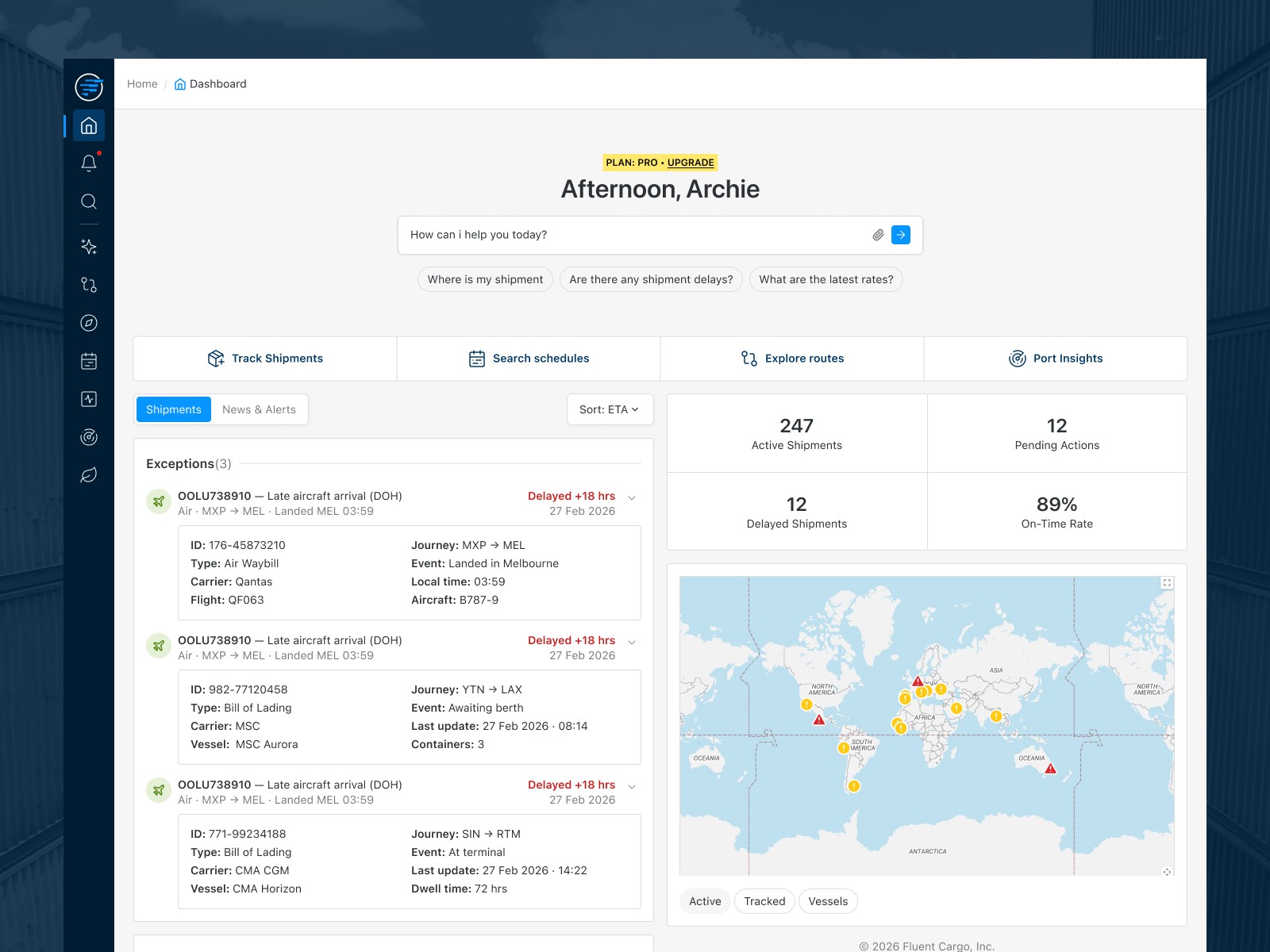
Mapped and normalised carrier status codes across all active shipments to find common patterns and inconsistencies.
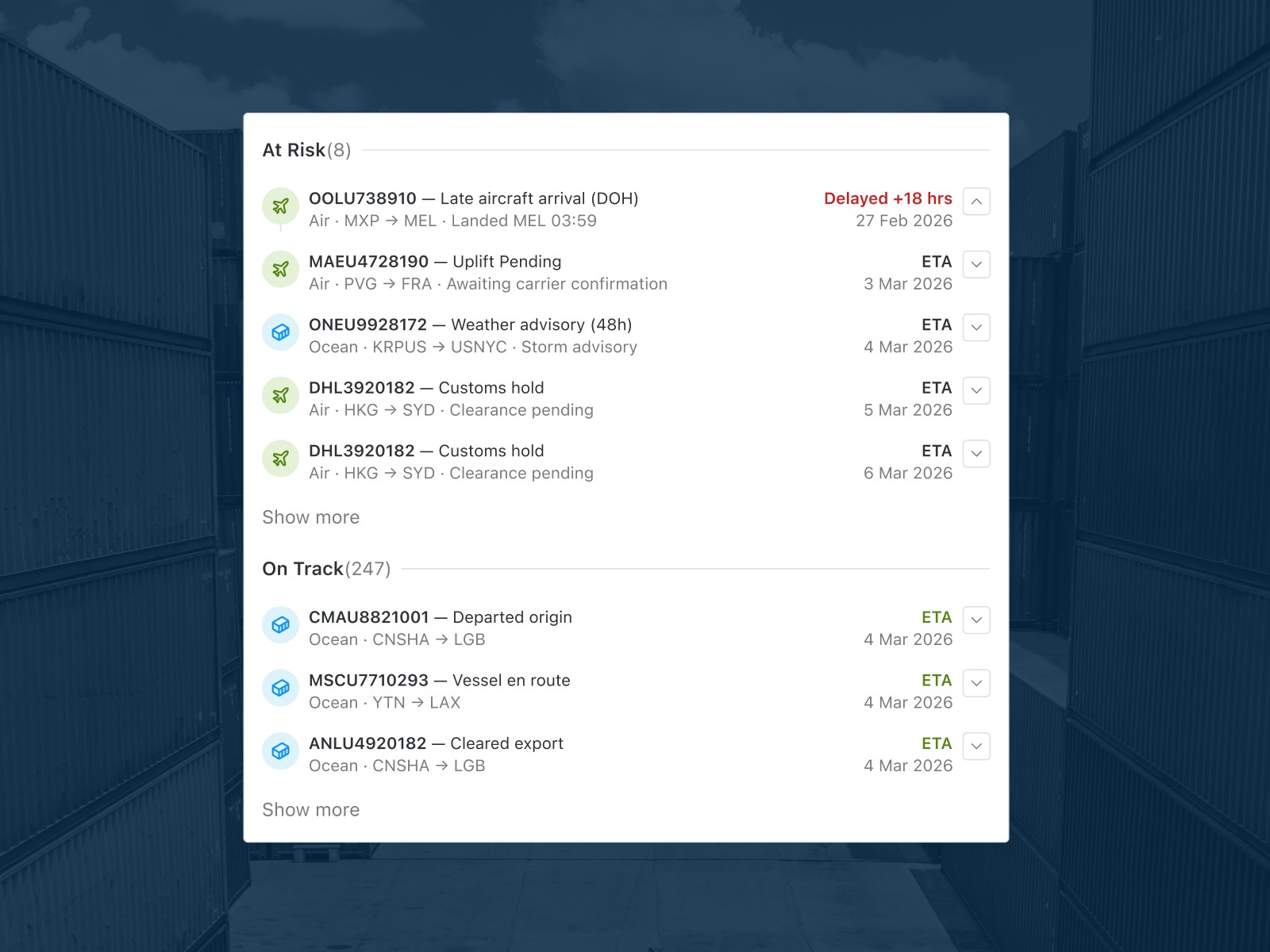
Analysed shipment histories to identify the most common delay types, causes, and the points where operators were losing visibility.
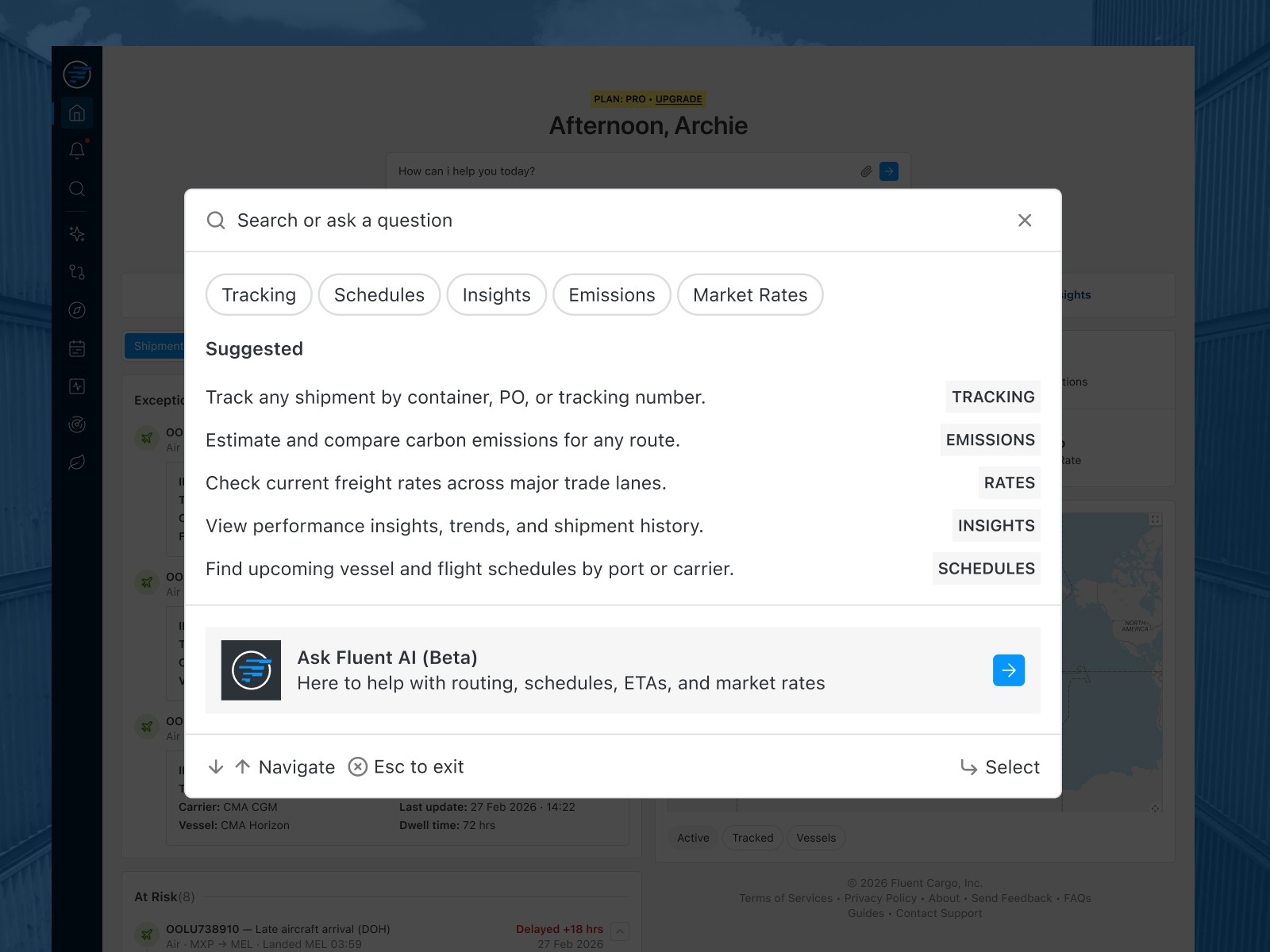
Shadowed operators to understand how they currently investigated delays and what information they needed first.
Outcomes
Redesigned tracking reduced manual investigation time and gave operators early visibility into delays before they became critical. Operators could see cause, status and downstream impact from a single view
• 987+ shipments tracked in single view
• Delay causes surfaced automatically
• Faster identification of at-risk shipments
• Reduced manual cross-referencing
• Earlier intervention on delays
Closing
The hardest part wasn't the data normalisation. It was deciding what not to show. Operators were already overwhelmed with information. Every addition had to earn its place by reducing effort, not adding to it.
Normalise before you visualise
Less is more in operational tools
Operators need to act, not just read
Surface causes not just status