Rodney Blackney
Senior Product Designer
Currently building AI-powered products for logistics and telecommunications at Fluent Cargo. Solving complex problems through simple, intuitive design.
Self Service Troubleshooter, Fix it yourself
Designed a self service troubleshooting tool that helped customers diagnose and fix their own connection issues.
Customer
Support
Self Service
Product Designer

Context
Belong customers were calling support for connection issues that could be resolved without human intervention. Wait times were long, call volumes were high, and customers were frustrated before they even spoke to anyone. The tools to fix most common issues already existed on the backend. Customers just had no way to access them.
Long wait times frustrating customers
High inbound call volume for connection issues
Most issues resolvable without agent intervention
Backend fix tools existed but were agent-only
No self service option for customers
"I just want to fix it myself. I don't want to wait on hold for something this simple."
Problem
Customers had no way to diagnose or fix their own connection problems. Every issue required a support call, even simple ones. This created unnecessary load on the support team and a poor experience for customers who just wanted to get back online quickly.
Simple fixes required agent involvement
No customer-facing diagnostic tools
High repeat call rate for same issues
Customers couldn't track fix progress
No transparency into what was being done
Approach
I started by analysing the most common call drivers with the support team. A service blueprint already existed and mapped the full resolution process from customer contact through to fix. That became the foundation. The design job was to take what agents were doing on every call and put it directly in the hands of customers.
Identified the highest volume, most resolvable connection issues from support data
Used the existing service blueprint to map the full resolution process and identify where customers could self serve.
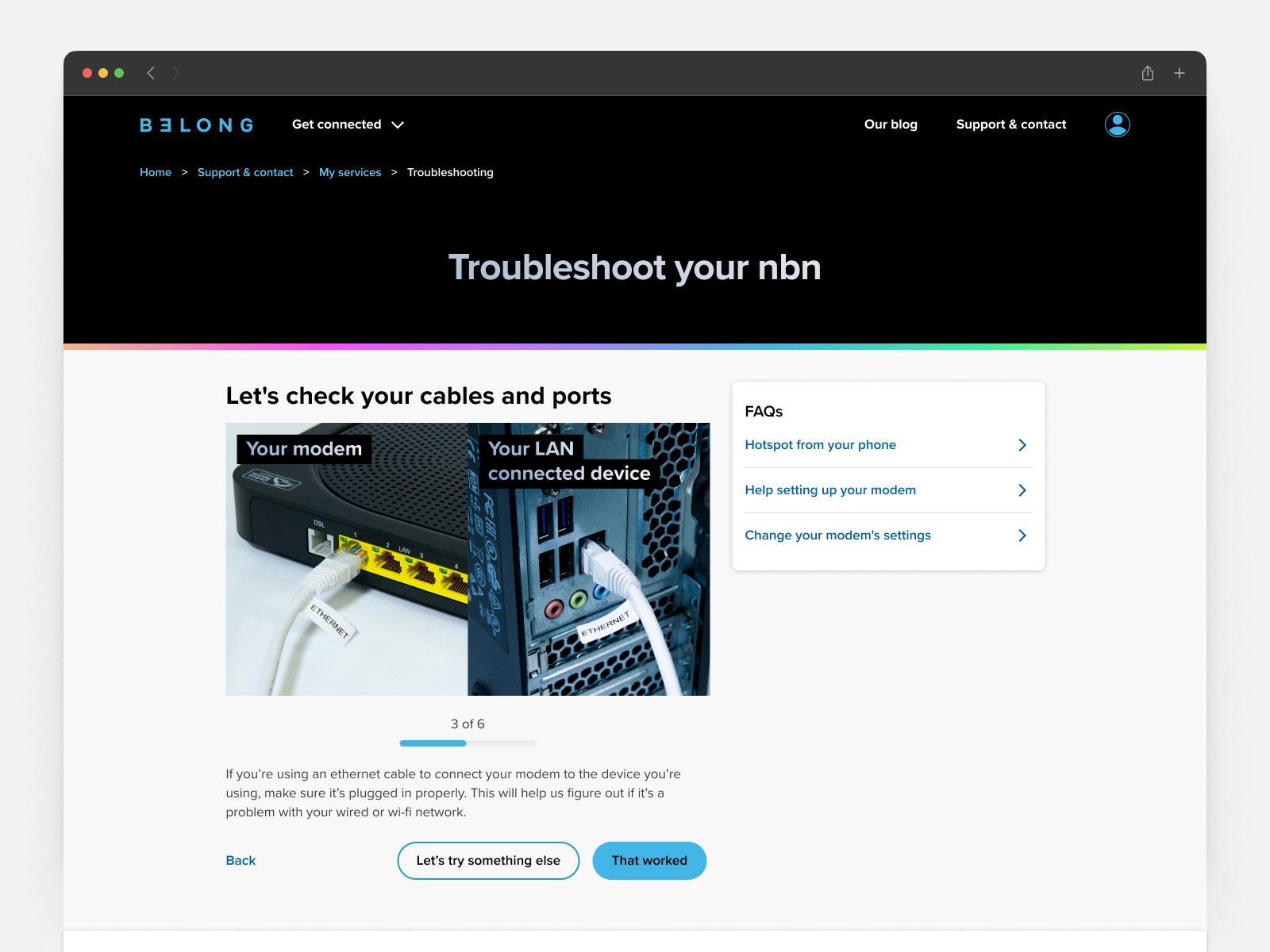
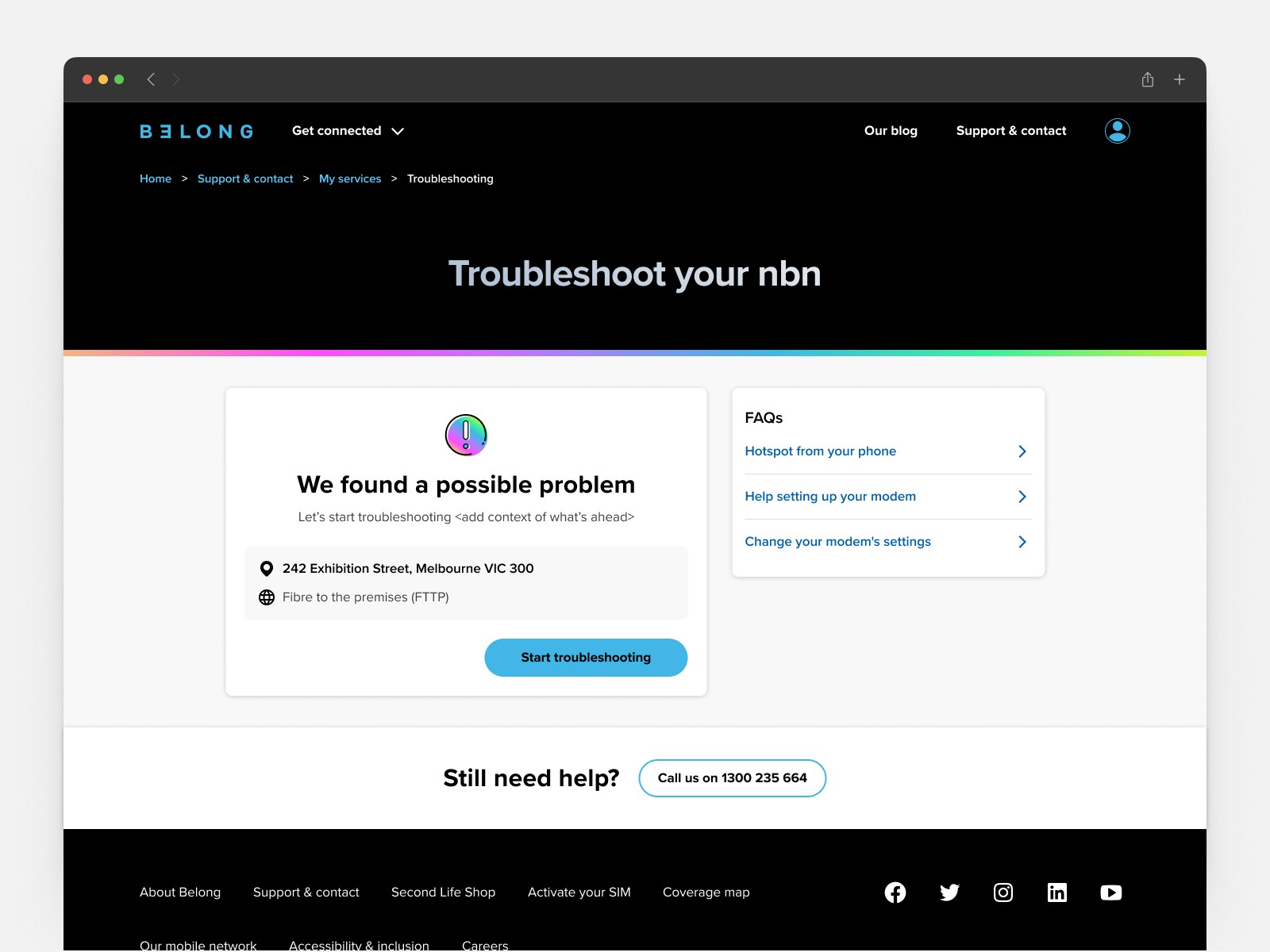
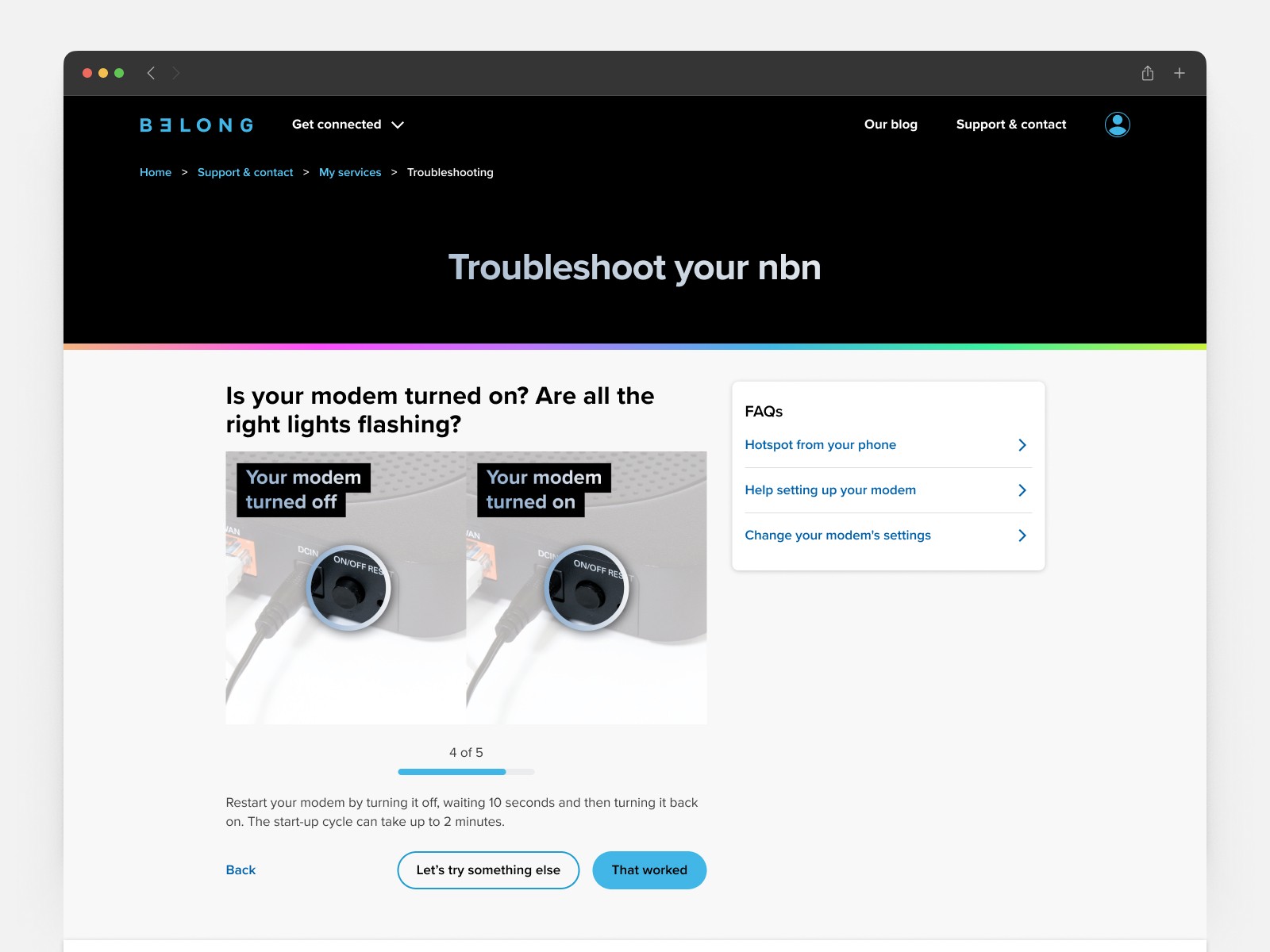
Translated the agent diagnostic process into a step by step customer experience.
Outcomes
The troubleshooter gave customers a faster path to resolution without needing to call. Support call volume dropped for the issues covered in the flow, and customer satisfaction improved for users who resolved their issue without agent intervention.
Reduction in inbound calls for covered issues
98% task completion rate
Faster time to resolution for self service users
Customers resolved issues without agent help
Improved satisfaction scores post launch
Closing
The service blueprint was the most valuable input in the project. It meant the diagnostic logic was already proven the design job was making it accessible, not inventing it. The biggest lesson was trusting existing operational knowledge over assumptions about what customers needed.
Operational knowledge is a design resource
Use what already exists before designing new
Self service only works if the fix actually works
Completion rate matters more than usage rate