Rodney Blackney
Senior Product Designer
Currently building AI-powered products for logistics and telecommunications at Fluent Cargo. Solving complex problems through simple, intuitive design.
Ask Fluent — AI Powered Logistics
Designed an AI assistant that answers complex shipping questions in real time, reducing 1,800+ manual queries into a single conversation.
Logistics
AI
Operations
Senior Product Designer

Context
Freight operators were drowning in fragmented data. The same shipment got checked 3–4 times across different tools. Simple questions — fastest shipping route, next ocean service, container ETA — had no single source of truth. Operators knew the answer existed somewhere. They just couldn't get to it fast.
Same shipment checked 3–4 times
1,800+ manual tracking queries per quarter
Data scattered, answers delayed
Simple questions, complex paths
No single source of truth for logistics data
"I just need to know where my shipment is. Why does it take four clicks and two tabs?"
Problem
Key shipment information was buried in carrier event logs, making it difficult to identify delays, causes, and impact. Users had to interpret inconsistent terminology and manually piece together updates.
Phased rollout — existing users first
AI mapped to real product actions
6-week build, exec-level visibility
Responses required real-time data
Built around what users actually ask
Approach
Before touching UI, I mapped real query patterns from support logs and user interviews. Operators weren't asking for dashboards. They were asking specific, time-sensitive questions. The AI needed to meet that, not redirect it.
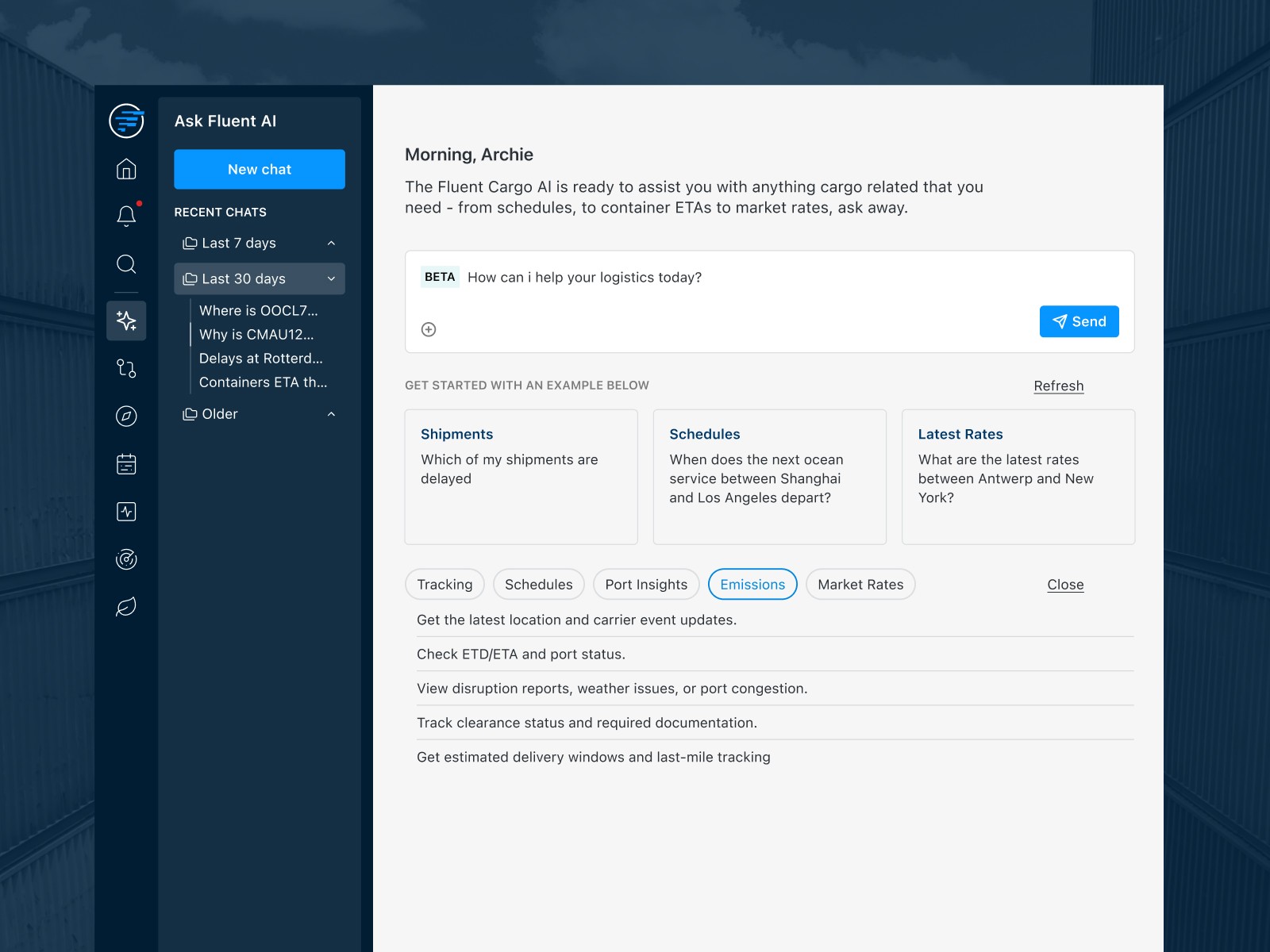
Conversational AI interface natural language queries returning logistics data
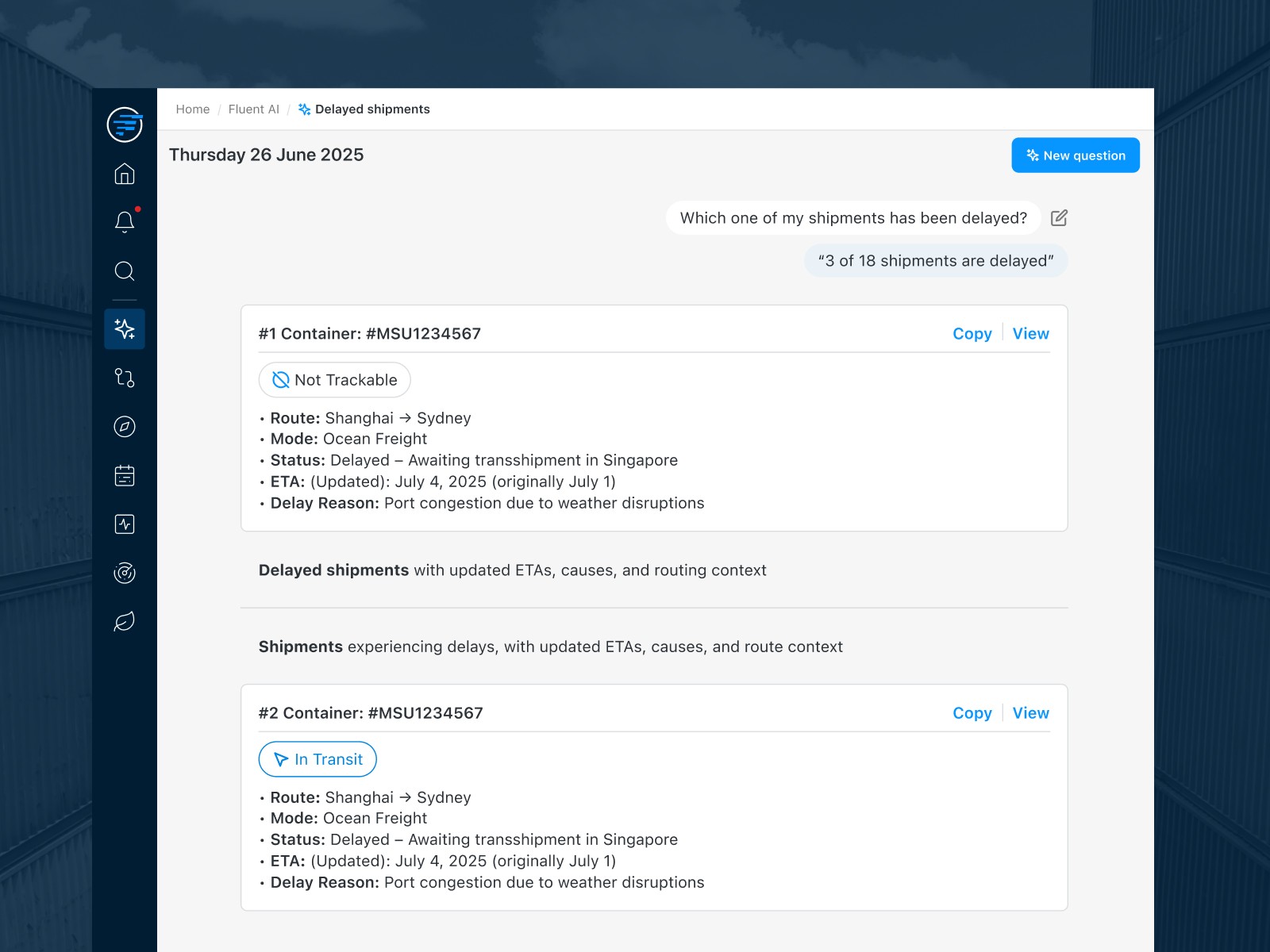
Structured shipment insights from a single query
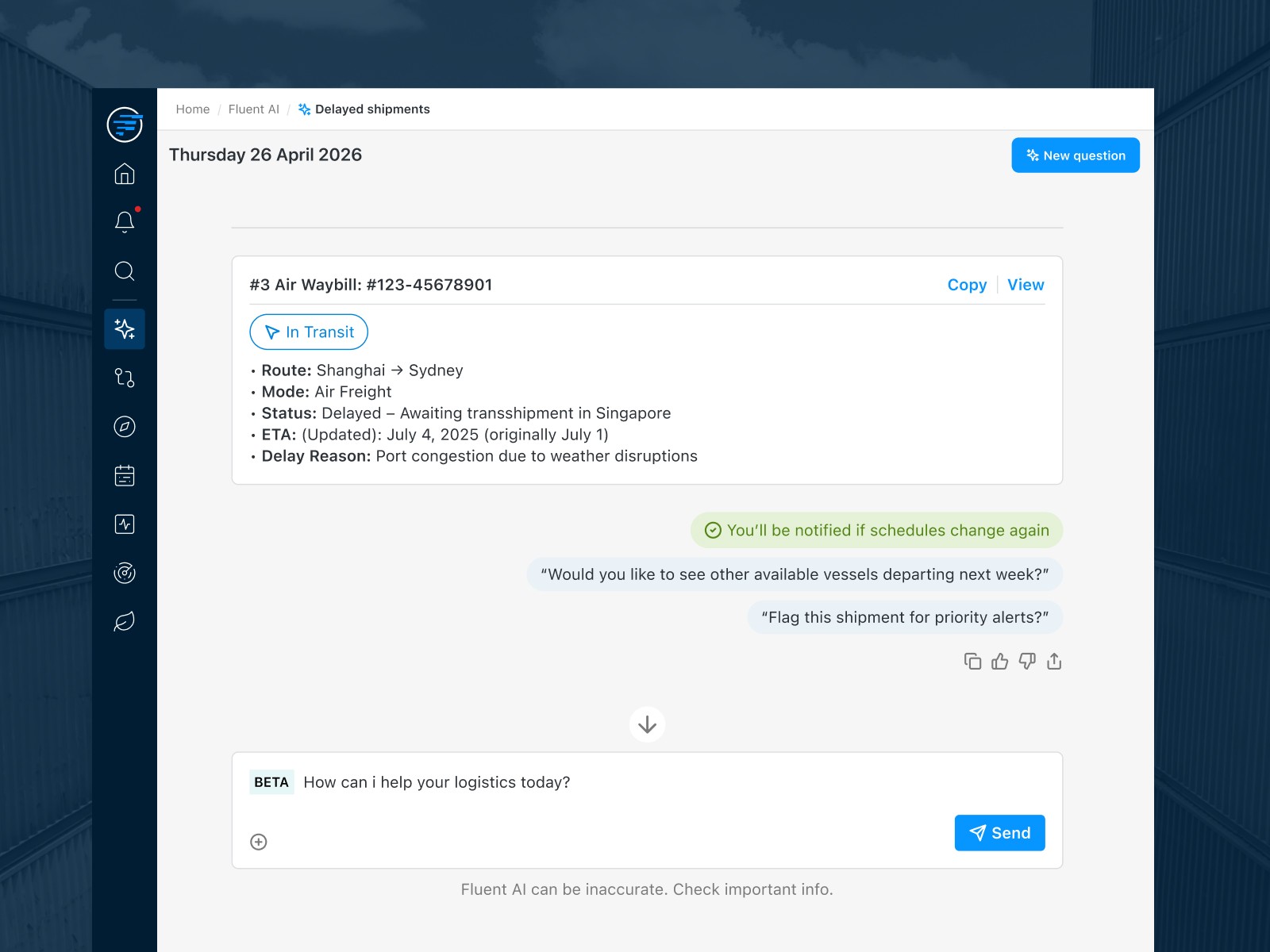
AI responses include context and suggested next actions
Outcomes
565 AI queries answered in the first 30 days, peaking at 48 in a single day. 41 suggested actions clicked. Operators weren't just reading, they were acting. Phased rollout to existing users delivered clean behavioural signal before scaling.
15 unique users on peak day
565 AI queries in 30 days
Multi-step tracking, one query
41 suggested actions clicked
Closing
The biggest risk with AI in operational tools isn't capability, it's confidence. Operators need to trust an answer before they act on it. Every design decision ran through that filter: does this response feel reliable, or does it feel like a guess?
Phased rollout is a design decision
Start with real queries, not hypotheticals
Embed, don't isolate
Trust before features